It's September and I'm starting to think about Nanowrimo 2015, that exciting and crazy month in November, where every year I attempt to write a 50,000 word first draft of a novel. I think September is the earliest I've thought of my Nanowrimo novel, normally it's some time in October I start to think of it. But I'd really like to give myself a good go of it this year. Perhaps this year will be the first one I actually win Nanowrimo?
Feeling inspired by my Art Challenge earlier this year, where I created a fantasy image based on an idea of a British secret service covertly fighting alien threats in the Victorian era. How would Victorian technology fare against alien technology? Aliens, alien abduction, experimentation on humans, shapeshifting aliens, alien robots and monsters attacking Earth and it's inhabitants would all seem very alien and very strange to 19th century humans.
Although they could use Victorian guns, probably flintlock pistols and rifles, and gunpowder (most enemies don't fare too well against large explosions), I think they would still struggle against alien enemies. Perhaps they could make use of the occult knowledge that was so popular in Victorian times. Consulting psychics to determine when and where any alien encounters or threats had or would happen. They could also seek out witches and mages to do battle against alien enemies, summoning spirits and werewolves to do their bidding. This may make the battleground a more even one.
Their communication abilities would be very archaic compared to today, before telephones of any kind were invented, not even radio communication existed. Letters would have been posted, and if something could not wait 24 hours for first class post, messengers could be sent, like errand boys (or grown men if they could not trust them) to deliver paper messages that were urgent. Members of the secret service could turn up at an agent's house, or meet them at a pre-arranged time, such as at a park. They could pass paper messages that would need burning after reading. Or they could have some sort of code. Perhaps Braille? They could have secretly invented before it was released to the public to be used by the blind, it could have been used as a discreet code around the edge of postcards or greeting cards to be sent through the post to secret service agents.
Steampunk technology could have been invented in a similar way, to look like Edwardian technology, that was secretly invented earlier than was released to the general public. What kind of Steampunk technology could they have had? Electricity hadn't been invented, so it would have to be something running from a steam engine, or cogs like a wind-up clock mechanism, which could be very small like a pocket watch, or something very large like Big Ben.
Perhaps I can spend these 2 months leading up to Nanowrimo researching Victorian technology and what occult and superstitious beliefs they had, to give me plenty of ideas to go through in November. I find I struggle when I don't know what is going to happen next in my novel, I've tried winging it with absolutely no prep at all, and I've tried with lots of ideas seemingly carefully planned, and then run out of steam.
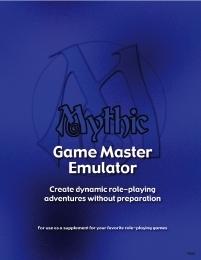
This year I hope to be more prepared with ideas I can pick at random, and make use of the Mythic Game Master Emulator, originally designed to emulate the Game Master (or Dungeon Master, if playing Dungeons & Dragons), and allow a group of friends to roleplay without a GM (or DM), or to play a roleplaying game solo, without any other players (which is what I originally bought it for). But when you read into the Mythic Game Master Emulator ebook, you learn that it can actually be used for writing a novel, ideal if you up against a deadline (such as Nanowrimo), and don't know what to throw at your characters next. I'm hoping it will help me keep pressing on with my novel, when I'm stuck and feel I don't know where to go next. It should also help it feel like a game too, making it more fun! I might even try having a list of ideas or events, up to 100, that I can then throw a 100 sided dice (1d100 or 2d10's), to pick something at random to put my characters through. I love challenging my characters, and seeing what they can survive through!
Anyone else thinking of their Nanowrimo 2015 novel? I'd love to hear what you're working on and any tips you have for ploughing on through 50,000 words in 30 days!
I’ve always loved anything
miniature and small. As a child, I loved
reading The Borrowers by Mary
Norton. I was intrigued by Arrietty, the
young daughter of a family of Borrowers, tiny people who lived under the
floor. When they emigrated in The Borrowers Afield I loved exploring
the great outdoors through her eyes, discovering giant grass and hedges to
climb, beautiful flowers, giant buzzing bees, mice and frogs. And so began my love of nature. I used to imagine my miniature self, running
barefoot across the moss in my garden.
This glossy green carpet is perhaps one of the most ancient of plants, having
no roots or stems, nor true leaves. Many
varieties of moss thrive in the ancient woodland of the British Isles. It grows over rocks and soil, tree bark and stone
walls.
Lichens also grow on the bark of
trees, and are similar in that they have no roots, and absorb water all over
their surface. They need moist humid air
within which to grow, and the best place to spot them is in damp ancient
woodland. Because they absorb water from
the air around them, many varieties of lichens cannot survive near motorways or
human habitation due to the pollutants in the air, such as sulphur dioxide and
carbon monoxide, which dissolve in the water in the air that they drink. In these areas only Pleurococcus, a microscopic alga that turns tree trunks a dirty
green colour, seem able to survive. In
ancient woodland you see a much more varied and exciting variety of lichens,
including Tree Lungwort (Lobaria
pulmonaria), one of the largest lichens with large light green leaf shapes
growing over tree trunks, whose presence is often an indicator of ancient
woodland.
Ancient woodland is rare in that
it has undisturbed, and very rich soil.
It has not been ploughed or turned over by man for centuries, if at
all. It often dates back to the last Ice
Age, and in deciduous woodland, has been fed every year with the falling leaves
in autumn. Deciduous trees also enable
the prolific growth of another key ancient woodland indicator species – the English
Bluebell (Hyacinthoides non-scripta). They flower and leaf early in the growing
season, making the most of the available light before the tree canopy closes in
late spring, giving a beautiful carpet of colour so typical of British woodland,
and much loved pollen and nectar for our humble Bumblebees.
Ferns are also well adapted to
woodland, these shade loving group of plants are one of my favourite. I love how each leaf gradually uncurls from
the centre, extending out into beautiful light green fronds, it’s like
unwrapping a present. Large ancient trees
in Britain harbour many beautiful little rare treasures, like the Golden
Hoverfly (Callicera spinolae), large
furry hoverflies that more closely resemble a honeybee, except that they have
long black antennae that are white at the tips.
The adults are active in September and October, often feeding on nectar
rich ivy as it is one plant which offers nectar and pollen at this time of the
year. Golden Hoverfly tend to lay their
eggs in ancient trees that have been pollarded, where wet rot holes have often
formed, or in the snags and complex branch structures of these old trees.
Perhaps the most elegant and
beautiful creature of ancient woodland, is the Purple Emperor Butterfly (Apatura iris). This Butterfly can appear black and white
from some angles, but when the sunlight strikes the wings at just the right
angle, a magnificent purple sheen is revealed.
This Butterfly spends most of its time up in the tree canopy feeding on
aphid honeydew, although it’s rather unusual diet does bring it down in the
early morning and again in the late afternoon, when it will feed on animal
droppings, carrion, moisture from damp mud, and have even happily landed on
human observers to feed on their sweat!
Another beautiful butterfly is
the Silver-washed Fritillary (Argynnis
paphia), a bright orange butterfly named after the silver streaks found
underneath its wings. This Fritillary is
most often found in woodland where it’s larval food plant, the Common
Dog-violet (Viola riviniana),
grows. As adults, they feed on aphid
honeydew in the woodland canopy, but also their favourite nectar sources, the
flowers of Bramble and Thistle. The Silver-washed Fritillary is a strong
flyer, hurtling along through the tree canopy searching for anything that might
be food, and investigating anything remotely orange coloured in case it might
be a potential mate. Their courtship
flight is the most spectacular of all though, with the paler orange female
flying in a straight line, whilst the male continuously flies in loops all
around her, before eventually landing on a convenient spot where the male
showers her in scent scales. How
romantic!
Important managers of ancient
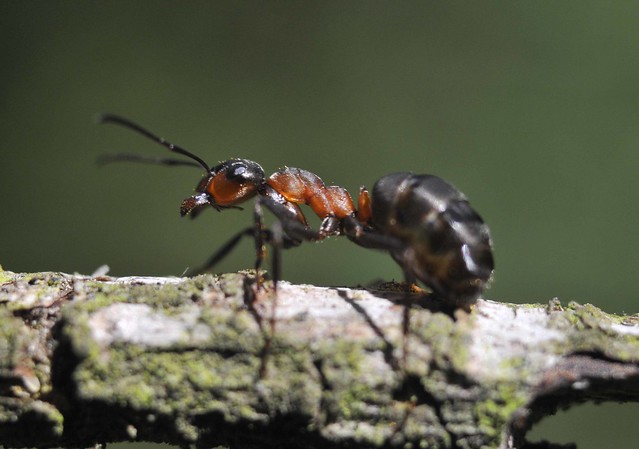
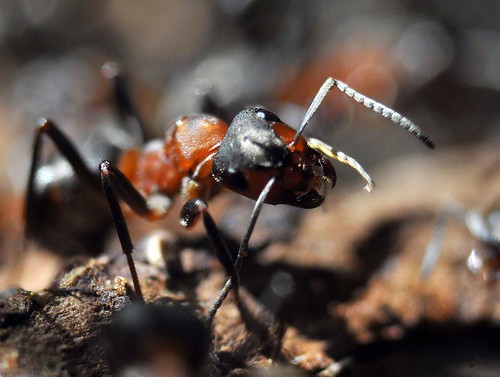
woodland are the rare and often overlooked are the Narrow Headed Ants (Formica
exsecta), recognised by a deep notch at the back of their head. Even though they are only 10mm long, they
play an important role in helping to regenerate forests. Certain plants are dependent on ants for
distribution of their seeds. For
example, Small Cow Wheat (Melampyrum
sylvaticum), produces seeds with a small sweet attachment which attracts
the ants. The ants carry the seeds to
their nest, where they will consume the yummy food, before taking the seeds out
of the nest and disposing of them somewhere new where they will germinate into new
plants the following year. Ants must
have a sweet tooth too!
Narrow Headed Ants are also
surprisingly green in their way of living. Masters of eco architecture, they build large
dome-shaped nests around a tussock of grass or some similar plant, which
provides not only the foundation of the nest, but also heat as the vegetation
decays within their nest. They also
build their nests asymmetrically, with the larger and flatter side facing
south, so as to get the maximum heat from the sun on their nests. The worker ants also go out sunbathing, before
returning to the nest and using their now heated bodies to warm and help
incubate the eggs. They also thatch
their roof with a covering of grass, heather and pine needles, insulating their
home from the cold. I guess when you’ve
gone to so much trouble to make your home so nice, you can understand how wood
ants can be very territorial, and Narrow Headed Ants are no exception. They have been known to climb onto the backs
of other ant species, and decapitate them from behind, literally biting their
heads off! Perhaps they’ve watched one
too many zombie movies?
If you’re looking for more scary
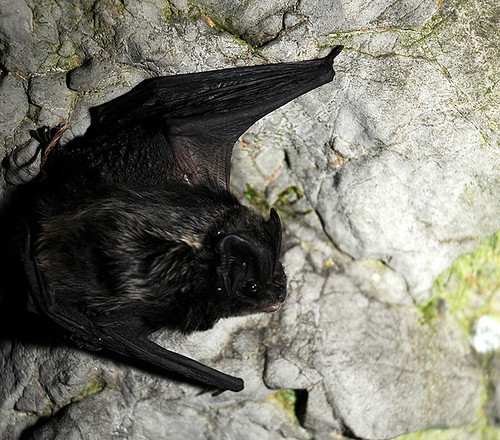
creatures of the forest, there are a couple of rare bats, the Barbastelle Bat (Barbastella barbastellus) and Bechstein’s
Bat (Myotis bechsteinii). I think the Barbastelle Bat is probably the
scarier looking of the two, being mostly black and pictured here in caves. It’s kind of ironic to think that humans used
to live in caves, and these days most of us tend to have a fear of Bats
flapping around us, how did we ever manage to live in caves with them? Surely we must have come across them in the
past, or is that where our fear of them first came from? Did we inadvertently spook them with a noise,
or was it just their time to fly out, and we happened to be in the way when
they went?
Apparently, Bats roost in
different locations at different times, depending on whether they just want
somewhere to sleep for the day, a breeding roost, or a hibernation roost. For breeding, they prefer higher treetops,
just under the canopy, where the sun will keep the females and their babies warm. Non-breeding adult females, and males, prefer
hollows and damaged spots in older or dead trees to keep cool in for sleeping
during the day. But in winter, they need
somewhere cooler, to allow their body temperatures to drop, preferably quiet
where they won’t be disturbed, and somewhere with a consistent
temperature. Perhaps in the base of an
old tree, but Bats would also find caves ideal for this. Perhaps they would hibernate deep in caves,
whereas prehistoric man would be nearer a cave’s entrance making small fires to
keep warm. Then come springtime, a whole
swarm of Bats could come flying out, surprising and terrifying humans, who
would have had no idea they were there!
I think the cutest creature of
the UK’s forests has to be the Dormouse (Muscardinus
avellanarius), a quick search on GoogleImages brings up many gorgeous pictures to melt your heart. Dormice are so sweet, with tiny human-like
hands, cute faces, golden brown fur, and a fluffy tail. They spend most of their time sleeping, they
sleep all day long, and hibernate up to seven months a year. They wake up in April, and spend their
nocturnal lives searching for food amongst the branches in the trees, often
taking long detours and leaping from branch to branch rather than having to
risk the danger of predators on the ground.
They tend to feed on flowers and pollen in the spring, fruit during the
summer, and nuts in the autumn. Their
favourite food is hazelnuts and bramble, whose flowers and berries can sustain
them for quite some time, but they can also eat aphids and caterpillars. The trees really do hold all they need, even
giving them nesting material, and hollows within which to build their nests
close to the ground for winter hibernation.
Over recent years, Dormice are in
decline. Because of their specialised
diet, and because of their fear of crossing open ground, dormice are restricted
to ancient woodland sites, they cannot cross open ground to colonise other
sites when their woodland habitat is destroyed.
All the species I have mentioned today are especially adapted to ancient
woodland, many are rare and threatened.
Amazingly, only 2% of the British Isles is covered in ancient woodland,
and only half of it is in a semi-natural condition. The other half has been planted with exotic
and invasive species, such as conifers and rhododendron, spoiling the biodiversity
and making it difficult or impossible for our native species to survive
there. These woodlands need careful
management, with the maintenance of native species of flora and fauna, to bring
the woods back to what was originally here in these woodlands. We cannot bring back the species that are
already extinct, but we can use what we’ve learned to protect the threatened
species barely hanging on to our British countryside.
The National Planning Policy
Framework (NPPF) is meant to protect special sites like these, to protect the ancient
forests of Britain and its inhabitants from extinction. But their wording has provided a huge
loophole allowing any potential developers to bulldoze straight through the
land. This is what it says:
“Planning
permission should be refused for development resulting in the loss or
deterioration of irreplaceable habitats, including
ancient woodland and the loss of aged or veteran trees found outside
ancient woodland, unless the need for, and benefits of, the development in that
location clearly outweigh the loss.”
How can any benefit of
development outweigh the loss of such a beautiful habitat and the amazing
species within it, which could be lost forever?
The Woodland Trust believe this wording is as much use as a
chocolate teapot. The wording should be
changed to ancient woodland loss being “wholly
exceptional.” The UK government disagrees,
they believe there is adequate protection, despite there being absolutely no
evidence to back that claim up. What do
you believe? Do you want to protect our
amazing and precious species?
The Edge Chronicles - Doombringer Book 2 Of The Cade Saga
By Paul Stewart & Chris Riddell
I stumbled across this book in
the recently returned section of my local library. I was drawn to it by the beautifully illustrated
cover by Jeff Nentrup, this
magically floating ship with it’s starry lights along the hull, and a delicate
plume of smoke coming from a giant metal-plated ball, which I later learn is it’s
phraxchamber, and this is in fact, a skytavern!
This is the first book in The Edge Chronicles I have read (even
though it is book twelve in the series), and it is the second book in The Cade Saga, a trilogy of books
focusing on the main character, Cade Quarter.
But it doesn’t matter where you join in, as the authors (writer, Paul
Stewart, and illustrator, Chris Riddell) do an excellent job of introducing you
to the series, gradually filling you in on the character’s history as you go
along. There are no lengthy sections of
backstory, just gentle titbits fed to you as and when needed. The language used just lightly challenges you
too, I only had to reach for my dictionary a couple of times, having not come
across a ‘coracle’ before, for example.
I had no preconceptions of this
series so I had no idea what to expect.
From the cover I assumed this might be a steampunk novel, and there are
steampunk elements, but I think this book really excels at creating a fantasy
world in the Farrow Ridges, a beautiful idyllic wild land surrounded by
woods. The novel starts off slow and
safe feeling, it kind of reminded me of my days reading The Borrowers by Mary Norton, when they first venture afield, the
lazy summer days admiring the natural beauty of nature around them. The descriptions in this novel are amazing,
you never forget you are in a fantasy setting, with materials such as ‘ironwood’
and ‘snailskin’, creatures like ‘Glitterwings’ and ‘Tilder’, give an
otherworldly feel to it, yet somehow they seem relatable too. The attention to detail, the different settlements
built by the different races of goblins, they all have different cultures and
ways of building their homes that sets them apart, they are unique and I loved
discovering so much. You feel fully
immersed in this beautiful world.
The illustrations by Chris
Riddell are brilliant, with such great descriptions in this novel, it feels
vivid and real to you anyway, and you could argue you don’t need them, but
Chris Riddell captures the feeling of the scenes perfectly. You feel the excitement, the joy, the calm
before the storm, and the immediacy of the action, not to mention all the
details in costumes and scenery. The
illustrations help to bring the story to life.
My only gripe, and it’s really
only a small one, is at least at one point, Cade Quarter’s dialogue sounded
just like the narrator, describing the beautiful scenery in exactly the same
style as the author. It’s almost like he
lost his personality and became the narrator.
It’s only one brief moment of only a few lines, it soon passes allowing
you to get back on with the story.
There is so much to enjoy in this
novel, there is danger, excitement, joy, halcyon days when the characters relax
and enjoy their life, and you have to see and experience the good, to realise
what they potentially have to lose. You
really get to know their characters, the land they live on, and the dangers they
face. There are some amazing creatures
too, and the writer cleverly ups the ante as you progress through the novel,
and often surprises you. This novel has
been described as original and unique, and I completely agree. It is refreshing, awe-inspiring, and exhilarating;
as a really good adventure should be.
You think you know what’s going to happen next, and you are surprised at
every turn. Fresh, fun, and you just
have to know more.
I love the ending of the novel
too, without giving anything away, the novel has a fully rounded up
ending. But just like any great movie, there
was a scene saved right to the end, like a teaser for the next instalment, and
it just left you dying to read the next one!
This was handled beautifully in this novel. I also want to check out the first book in The Cade Saga, The Nameless One. But I’m
not sure I can resist the pull to see what happens next, and where the authors are
going to take me next.
If you crave adventure,
excitement, beauty and wonder in a book, with characters you really get to know
and care for, then this book is for you.
Do we appreciate the country of our birth? The place we are born and grow up in? When we think of going on holiday, we often
think of visiting other countries; perhaps a road trip discovering America, or
a safari in Africa to discover the amazing wildlife out there. But we often forget to explore and discover
the wonders and beauty of the country we live in.
I live in England, part of Great Britain. Great Britain is an island that consists of
England, Scotland and Wales; with Ireland to our west and Europe to our
east. It’s funny, I don’t think of my
country as an island, I think of it as a large solid piece of land, a large
country. I imagine islands to be small tropical
patches of sand, a few palm trees in the middle, in a hot climate surrounded by
the ocean. That isn’t anything like
Britain.
Britain is traditionally a cold, wet and windy place. We think of business people rushing down the
rain-soaked city streets with umbrellas, everything cold, wet, and grey. But if you go back in time, Britain was a
very different place.
Prehistoric Plants
and Animals
During the last Ice Age, some 20,000 years ago, Britain was connected to
both Ireland and Europe by small strips of land, allowing prehistoric man and
beast to migrate in and out of the country.
Early humans had to be hardy, living in caves and making flint tools by hand,
they hunted brown bears, antelopes and wild horses across the frozen plains of
Britain.
The Ice Age eventually came to an end, with the ice thawing,
rising sea levels cut Britain off, first from Ireland, then from Europe
too. The once arctic climate now reached
a warm 17 degrees Celsius in summer, allowing birch trees to spread, with
shrubs and grasses appearing too. The green
and pleasant land that we know today was beginning to take shape. The main hunted animal species were horses
and red deer, although hares, mammoth, rhino and hyena were also hunted. How amazing that we had these creatures in
our country?
As the greenery spread and began to develop into forests,
humans struggled to hunt the herds of wild horses and reindeer they were used
to across the flat plains. They had to
find new ways to hunt, and turned to the pigs, deer, wild boar and aurochs (wild
cattle) flourishing in the new pine, birch and alder forests now covering our
land.
Around 5,000 years ago, as temperatures continued to rise,
the pine forests were replaced by woodland, nature was blooming, with so much
vegetation and wild animals, there seemed to be plenty to go around. But humans were also blooming, our population
was increasing, and so were our hunting and gathering skills. So much so, we were beginning to exhaust our
natural resources. (Sound
familiar?).
So around 4,500 years ago, we began growing our own plants
and domesticating wild animals as food. Forests
were cleared to make room for crops and animal enclosures. They farmed native pigs and cattle at first,
then sheep and goats were imported from the continent, along with wheat and
barley, for which Britons later became renowned wheat farmers in the eyes of
the incoming Romans. Britain gradually became
a country of arable land, pastureland, and managed woodland.
Humans relied on woodland for just about everything: food,
heat, animal enclosures, even shelter (once they ventured out of their
caves). Britons learned coppicing, the
art of cutting young tree stems down close to the ground, where new shoots will
grow back and can be harvested again. They
also discovered pollarding, similar to coppicing, only they cut the branches to
just above head height to prevent animals from grazing on the new shoots. Both brilliant ways to manage trees for
timber, without killing the tree.
This now makes sense of something I remember doing in Runescape, a medieval fantasy online roleplaying game set in a fictional world, where you performed a lot of the skills and tasks of medieval English people. I remember we chopped the trees down to stump height, and the whole tree would reappear within a few moments. Obviously time is speeded up in video games, but the concept remains the same, we were coppicing the trees so that they could grow back and be harvested again.
Personally, I would love to travel back in time, see the country as it was, covered in woodland full of strange and beautiful creatures. I think it would seem almost like visiting an alien planet today, a bit like in the movie Avatar when they explore the forest and see alien animals for the first time. Everything is wondrous and exciting.
Photo Credits: Images 1, 2 and 3 - Wikipedia Creative Commons license. Image 4 - WT/ML Woodland Trust Media Library.
Following on from my previous blog post about the European Union Nature Directives Review, I have very good news: The EU has had an unprecedented response to their public consultation, of just over half a million people standing up for nature! This is fantastic! At a time when nature needs these directives more than ever, with The Woodland Trust currently defending ancient woodland from over 600 threats in the UK alone. We now have to wait while the results of this public consultation, along with a assessment of the use of these laws across Europe, will be summarised and put forward to Ministers in Spring 2016. Fingers crossed they make the right decision and save these much needed laws!
Have a Green Adventure
In the meantime, why not take a well deserved break enjoying your local woodland? You can have a little adventure walking amongst the trees, observing some local wildlife - butterflies, birds, grasshoppers, bees and squirrels all make their homes in local woodland. You could try your hand at some wildlife photography, have a picnic (but always tidy up after yourself!). The Woodland is also a great place to clear your head for some creativity. Why not take a sketchbook with you, doodle what you see or what you feel? If you're more of a writer, write down all your five senses - what can you see, smell, taste, hear and feel? Record the experience fully, so you can cherish the memory later.
Finding a green space is the best way to cool down and escape the heat of the hot summer sun. (Yes, there is some sunshine over the UK!). Somehow the earth seems able to absorb the heat of the sun without reflecting it back up to you like concrete does. Plus you can always find a kind tree to provide a beautiful natural canopy to provide shade while you sit for a while, and let the cares of the world gently drift away.
Not sure where your nearest woodland is? Not to worry, The Woodland Trust has a great little tool on their website: Find a wood to explore. Simply enter your post code, click Go, and you will be shown a list of woods alongside a map, showing exactly where you nearest woods are! They also have lots of great ideas for things to do on your woodland trails too.
Wherever you go and whatever you do, have a wonderful summer, you've earned it.
[Photo Credit: WT/ML - Woodland Trust Media Library]
Photo Credit: WT/ML - Woodland Trust Media Library
There’s a little patch of trees
not far from where I live. One of my
first jobs from school, I used to walk through this little patch of trees. They grow on a strip of grass between two
roads, but they create a little archway, and it feels like you’re walking into
a little oasis. You can no longer see
the busy road or the factories that surround it. The grass is long where no mowing machine can
reach, Magpies lazily poke about in the grass looking for food, and make their
nests way up in the tall trees. It’s a beautiful little habitat protected by these tall, arching trees. A tiny
little paradise in the middle of two busy roads. It made my morning to walk through there, I
always had to pause and take a deep breath of nature, before gently strolling
on, feeling elevated by the green.
Now, many years later, I hear
they’re planning to build on my little patch of trees. My local council has plans to build on lots
of little plots of grass and trees all around my small town. They want to boost the economy with new homes
and new businesses. I’m going to miss my
little patches of green.
But this isn’t just happening in
my town, it’s happening all over my country, all over Europe, and probably the
world. And it won’t just be little
patches of trees, there’ll be bigger patches.
Patches of meadow, marshes, and forests; all containing their own little
ecosystems of wild birds, animals and insects.
Some of whom are endangered.
How can we protect them?
I was surprised to learn
that there are no British laws protecting our wildlife and their habitats. The only laws that have been giving any
protection to British habitats is the European Union’s Nature Directives. (I’d never even heard of these). They include a Habitats Directive and a Birds
Directive. They look after our little
friends and their homes.
The EU now wants to
review these laws and see if they are still needed. Given that the main focus is on regeneration
and development, I think these laws are needed now more than ever. While these laws may not be perfect, they may
be the only thing standing between our countryside and a bulldozer.
The EU thinks these laws are
little known about in the UK, they think no one over this side of the pond
cares about them, or our natural habitats.
I think it’s time we stood up proudly for our countryside, and protect our
little patch of land.
The EU have put together a consultation questionnaire to find out what people think of these laws. Over 100 organisations have joined together to
try to keep these laws. To make it simple for us to respond, they have
created a pre-filled in questionnaire submission form. Whether you are in the UK,
Europe, or the rest of the world, please take a couple of minutes to click on this link,
fill in your name and email address, and let Europe know we want these laws to
protect our countryside all across Europe.
Let’s look after our little friends, for in turn, they look after
us.
If you want to find out more
about what these organisations are doing, you can take a look at The WoodlandTrust’s EU blog post. You
can also send a message to the EU through The Woodland Trust, telling them in
your own words how important our wildlife and habitats are, and why we need
these Nature Directives.
Today I have signed up for a free songwriting course with FreeLearn and Sheffield University. I haven't yet learned how to play a musical instrument this year, though I have dabbled with learning to play the harmonica and keyboard before, learning a little of musical notation, and also learned this in music class at school. Even though this was a few years ago for me, I am hoping it will be enough to help me do 6 week course. It says:
"While it will be useful to have access to a musical instrument this is not a requirement, you can participate in the course just using your voice or with freely available music software."
I do have access to my musical instruments, I just don't know how to play them very well. I am very very rusty. But I am hoping this course will kickstart my enthusiasm for this again. I enjoy listening to music, I want to learn how to play the instruments, and to learn how to write my own songs, with lyrics and melody. I don't know what freely available music software there is, but I would like to try to find it before my course starts on Monday 8th June. I am both nervous and excited! Who knows, a budding songwriter could be just waiting to be discovered inside of me!